

Thingy
One agent. Voice, text, video. Four industries.
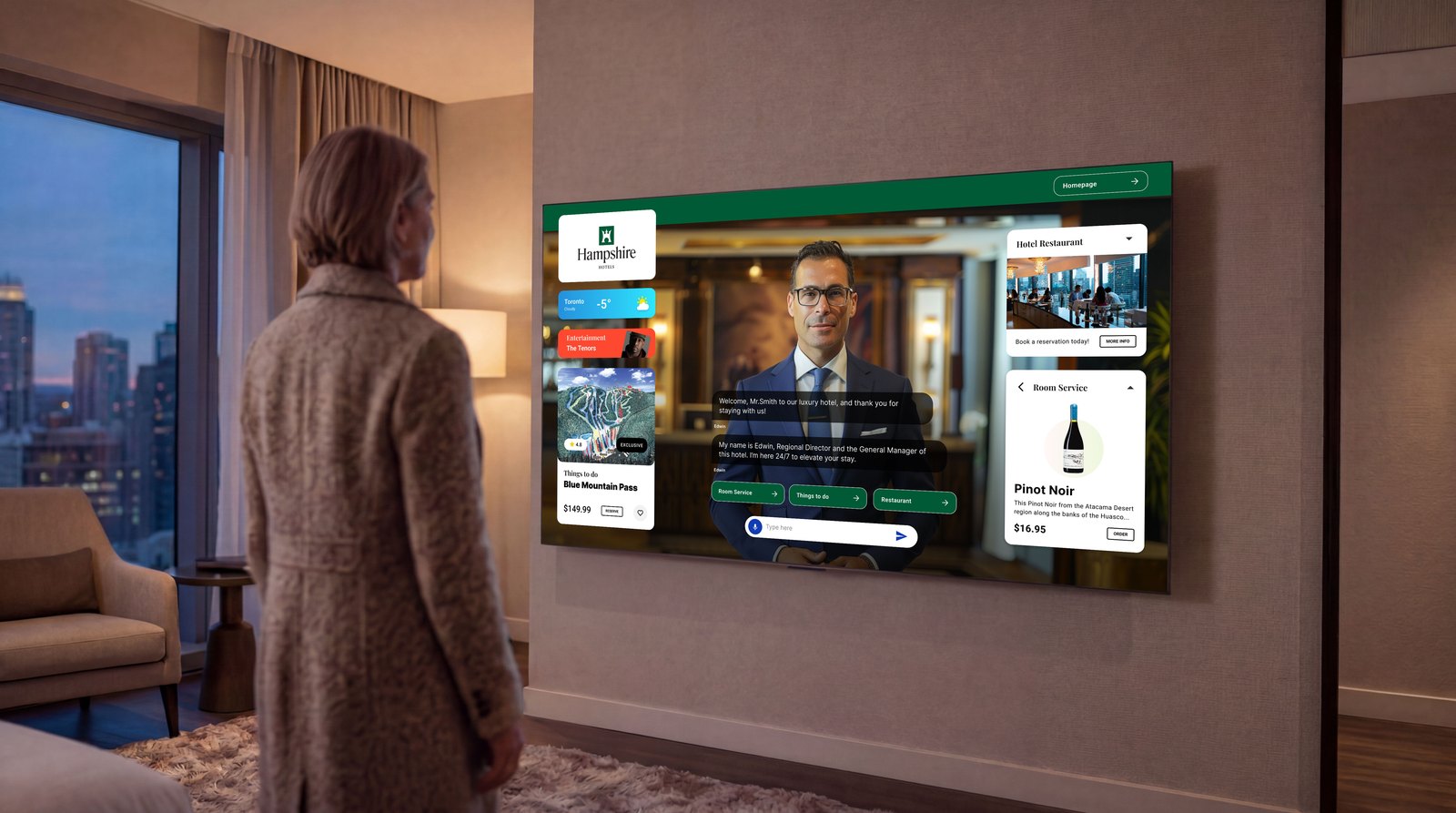
Most AI agents stop at answering questions. Businesses needed one that acts: it books the appointment, answers the investor question, runs the onboarding, and replies to the customer, updating the records as it goes. A chatbot that only answers does not move work. And a tool built for one industry will not fit healthcare, executives, HR, and marketing at once, since each has its own rules for privacy and data.
We built one assistant that works across chat, voice, and video and connects to the tools a team already uses, from its customer records to its scheduling and store. The same assistant is set up differently for each industry, so it can handle a patient follow-up for a clinic, an investor question for an executive, or an onboarding chat for an HR team, each following that industry's rules. It can live on a website, answer the phone, or sit inside another app, and it runs under your own brand.
Real customers run it across industries: Cornerstone Physio automates patient booking and follow-ups, Mr. Steak uses it to engage online shoppers, TODAQ Micro runs it for chat-based checkout, and Neural Cloud uses it to turn website visitors into booked calls.
Esmat Naikyar, President & CPO, Neural Cloud Solutions: "Our Thingy avatar prequalifies website visitors into leads and books calls directly into my calendar."
Have a similar problem? Talk to usContent Machine
The IR loop, closed.
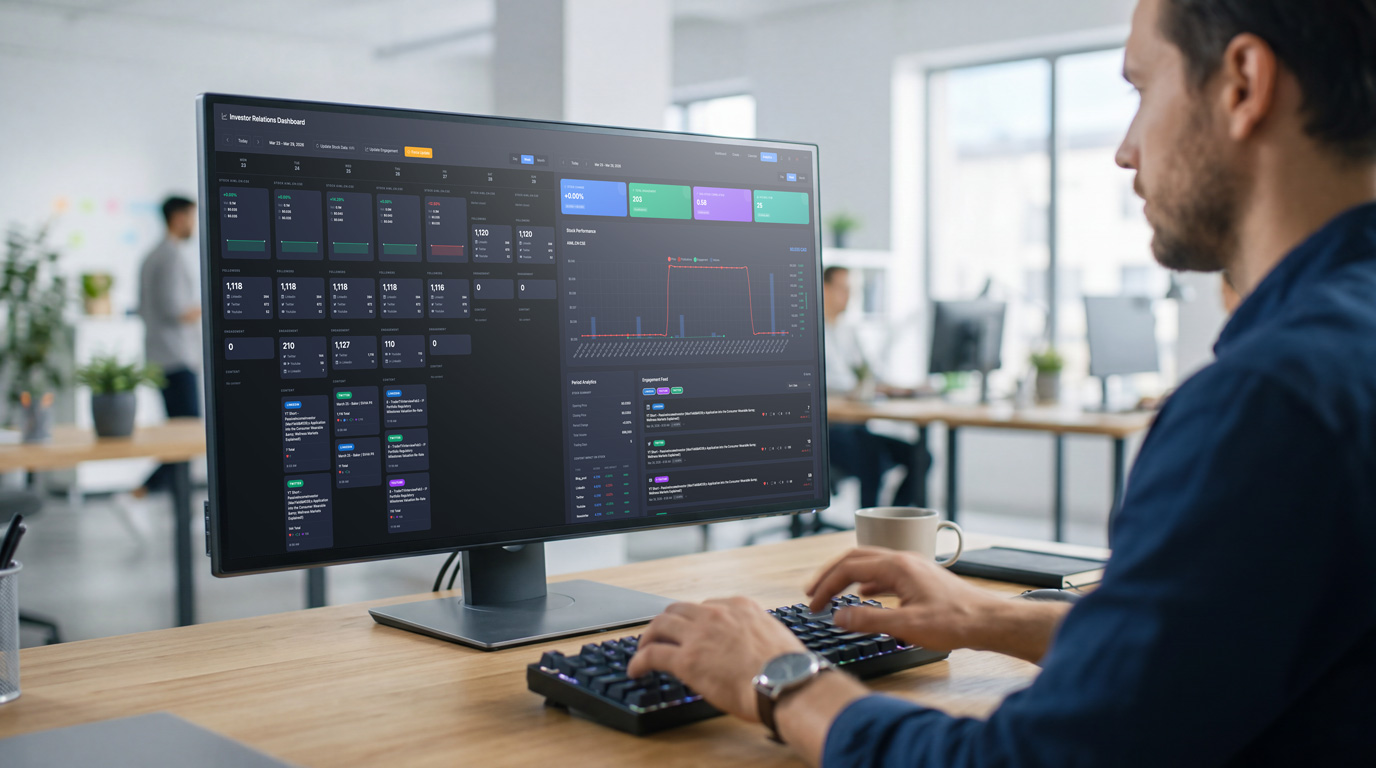
A public company communicates constantly: social channels, its own pages, press releases, earnings calls. What the investor-relations team cannot see is whether any of it moves how the market feels or what the stock does. Engagement sits in one tool, sentiment in another, and the stock price in a third. Nobody connects them, so the team is left guessing.
We treat investor relations as a loop you can measure. Three things feed one system: how people engage with the company's posts across LinkedIn, X, Instagram, YouTube and its own pages, how the market feels, and what the stock does, all compared against competitors, so the platform can suggest what to say next. You can publish from the tool too, but that is the input to the loop, not the point.
It tracks posts and engagement across every channel, updated daily, and shows how each one performs. It lines those posts up against the stock price, so you can see what moved the needle. It flags the best time to post, scores performance, predicts results, and alerts you to unusual swings in engagement or market mood. There is a dashboard for stakeholders with weekly and monthly board-ready PDF reports, and a careful track for the announcements public companies have to get right.
Live in production since late 2025, about ten releases. First client: Neural Cloud Solutions. IR teams see in one place whether what they said moved engagement, sentiment, and the stock, so the next message is a decision, not a guess. "It connects what you said, how the market felt, and what the stock did, then tells IR what to say next."
Have a similar problem? Talk to usCardioYield
The AI reads first. The technician confirms, faster.
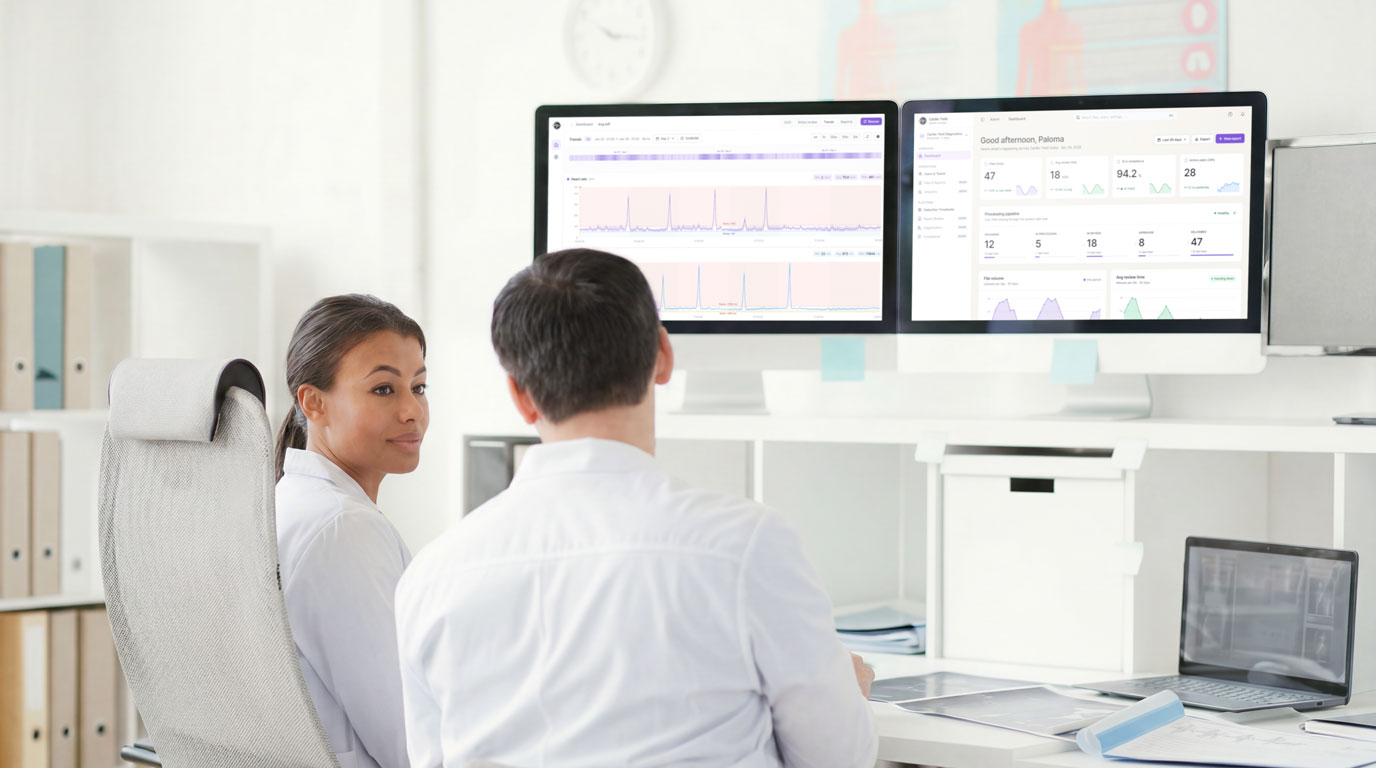
Neural Cloud's AI reads a multi-day heart-monitor recording and flags every heartbeat and unusual rhythm. The real challenge is the sheer volume. A single recording can run up to 14 days and hold tens of thousands of flagged beats, and a technician still has to review and sign off on all of them. Done the usual way, that means checking them one at a time, then switching to a separate tool to write the report. The technician's time is the bottleneck, not the AI.
We designed and built the application the technicians actually work in: the screen they review on, the AI-assisted review itself, and the path from a finished review straight to a finished report. The AI's findings drive the screen instead of sitting in a separate document. The AI does the first pass and groups what it finds, so a technician approves in bulk and only looks closely at the exceptions, instead of checking every heartbeat by hand.
The whole screen is built around the AI's first read. Findings come grouped so a technician can approve them quickly with the keyboard. The flow points them at what actually needs a human, not at every heartbeat. From there it runs straight into a finished report under the client's own brand, with no switching between tools. It checks the common types of heart events, and security, access controls, and full activity logs are built in from the start.
Technicians get through a multi-day study faster, because the AI does the first read and the workspace is built for bulk decisions, while every action is logged and the original recording is never changed. "The AI does the first read. The technician confirms in bulk and reports in the same place."
Have a similar problem? Talk to usNeural Cloud Operations Hub
Every area of the company in one live view.
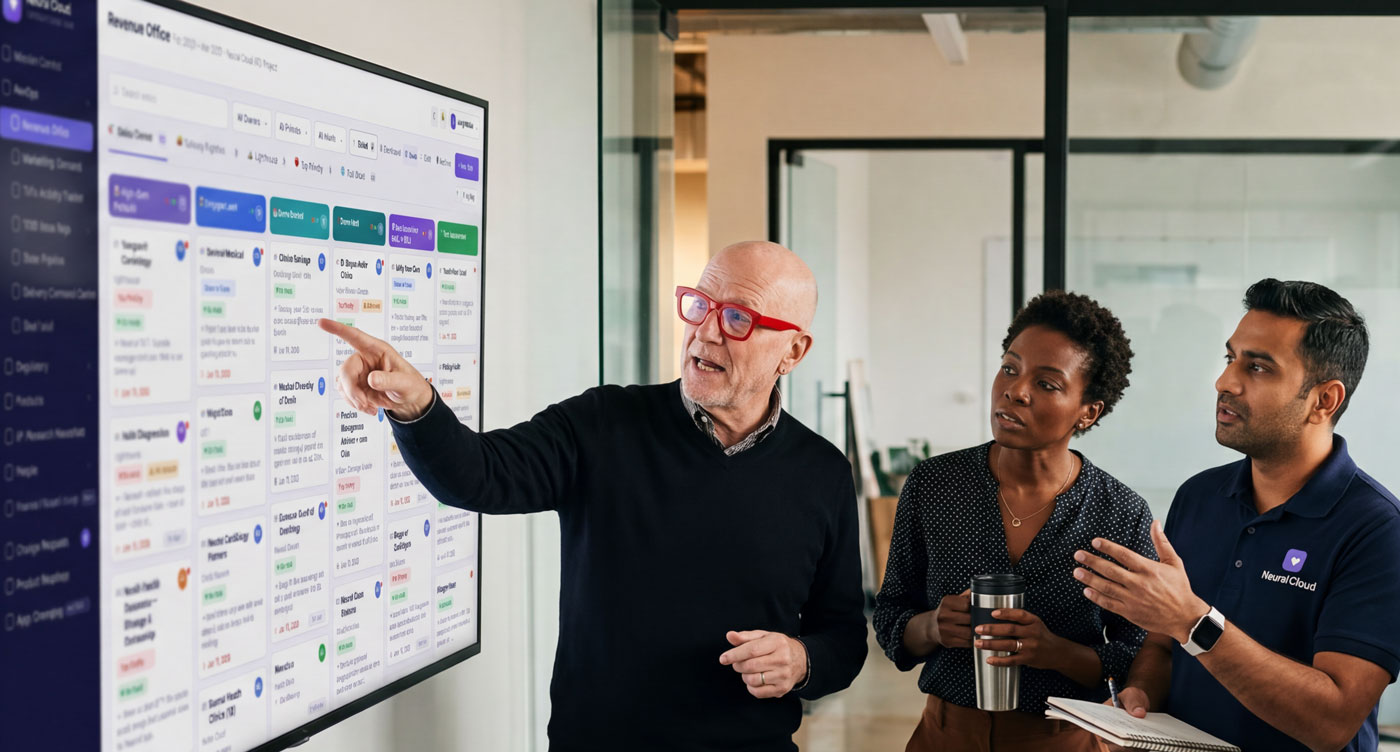
Neural Cloud runs across several areas: marketing, sales, delivery, product, and regulatory across multiple markets. Each one produced its own data in its own tools, which is normal for a growing company. What management lacked was one place where all of it came together. To see how the company was doing, leadership had to pull from many separate sources, and building a current, company-wide picture took real manual effort every week.
We worked with every team to design and build one unified management view, fed by the data each area already produces, and we added AI where it removed manual work. We sat with each team, mapped their data in, and let revenue, sales, delivery, product, and regulatory feed a single live view that stays current on its own.
Then we put AI inside the work the team does every day. Meetings get turned into clear next steps automatically. Support and product requests get grouped, analysed, and summarised instead of sorted by hand, then passed into the team's task tracker. Alongside the main dashboard for marketing, sales, delivery, and reps, there is tracking for every product and a tracker for approvals from regulators in three countries, with milestones and timelines.
Leadership reads one current, company-wide view instead of assembling it from many sources, and the team gets time back as AI handles meeting notes and sorts incoming requests. "Every area of the company in one live view, with AI turning meetings and tickets into next actions."
Have a similar problem? Talk to usMerchanauts
Point it at your store. Set the look. It restyles the whole catalog.
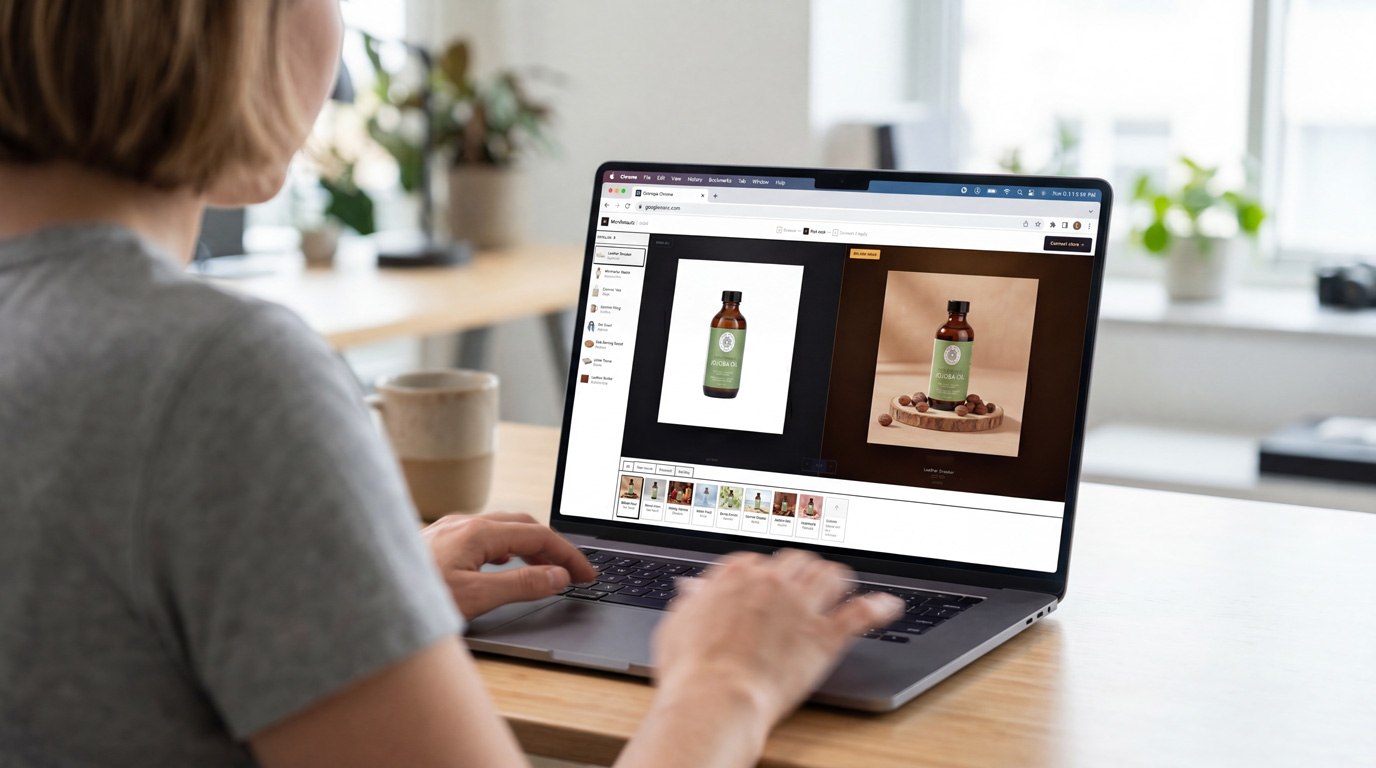
Online stores live or die on product images and copy. But producing consistent, on-brand photos and search-friendly text across a large catalogue is slow, manual work done one product at a time. Restyling every photo to a single look, writing the copy, and pushing it all back into the store simply does not scale by hand.
Pick one image to set the look you want, then let the AI restyle every product photo to match. Each one goes through a review where you see before and after, and approved images and text publish straight to your online store. The person approves. The AI does the heavy lifting.
You can drag in images in bulk, guide each one, set a reference look, and pause or resume the queue. It connects to your online store to pull in your products, push the new images back, and update each listing. Every image gets a before-and-after review with approve, reject, and publish controls. It also writes search-friendly product text and fills in product details. And it reports on how many products were updated, storage saved, time taken, and success rate.
A store restyles and republishes its catalogue imagery from one dashboard instead of editing product by product. "Point it at your store, set the look, and it restyles the whole catalog."
Have a similar problem? Talk to usRankZinga!
Whether the AI recommends you. Then what to fix so it does.
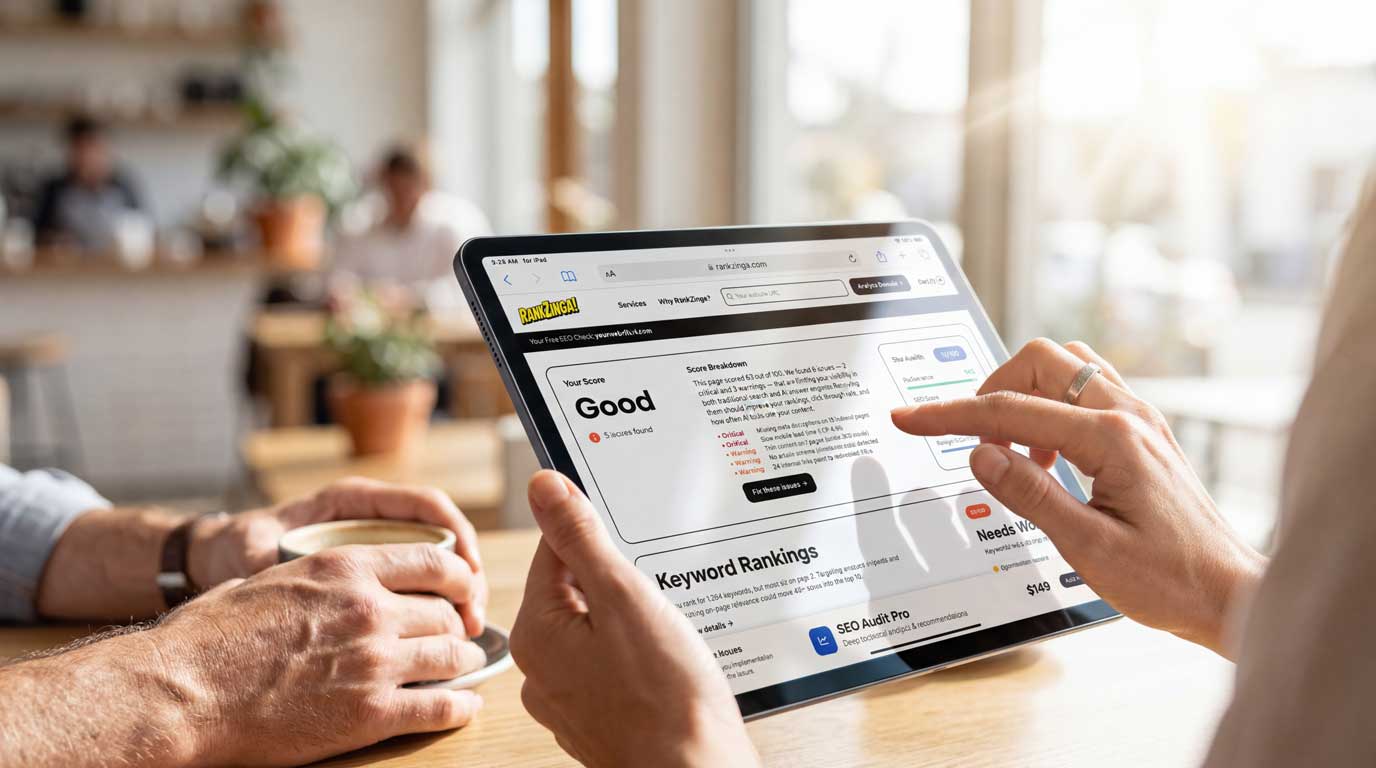
Buyers now discover brands through AI assistants, not only Google. Most search tools do not measure or improve how visible a brand is to those assistants. Teams could see their Google rankings, but had no read on whether ChatGPT and others actually recommend them, and no way to close the gap.
We treat AI mentions as something you can measure. It checks a site's pages, tracks where it ranks on Google, and measures how often AI assistants mention the brand, then points out where to improve. It runs the heavy checks in the background, so it can handle many sites at once.
It audits a site's pages and tracks its Google rankings. It measures how often AI assistants mention the brand, and how it compares. There is a dashboard built for agencies to manage many clients' audits, keywords, and AI visibility in one place. The heavy crawling and analysis run in the background so nothing slows down. And it suggests the right next service wherever it spots a gap.
Agencies measure AI-assistant visibility alongside classic rankings and act on the gaps. "It tells you whether the AI recommends you, then what to fix so it does."
Have a similar problem? Talk to us